
EDeN Director Dr. Guangqing Chi Co-Authors Landmark Commentary on U.S. Climate Assessment Research Priorities
At the Environmental Demography Network (EDeN), we are proud to announce that Dr. Guangqing Chi has coauthored a major new commentary: “Research priorities for robust climate assessments in the United States.” The paper was published simultaneously in the American Geophysical Union’s Earth’s Future and the American Meteorological Society’s Bulletin of the American Meteorological Society.
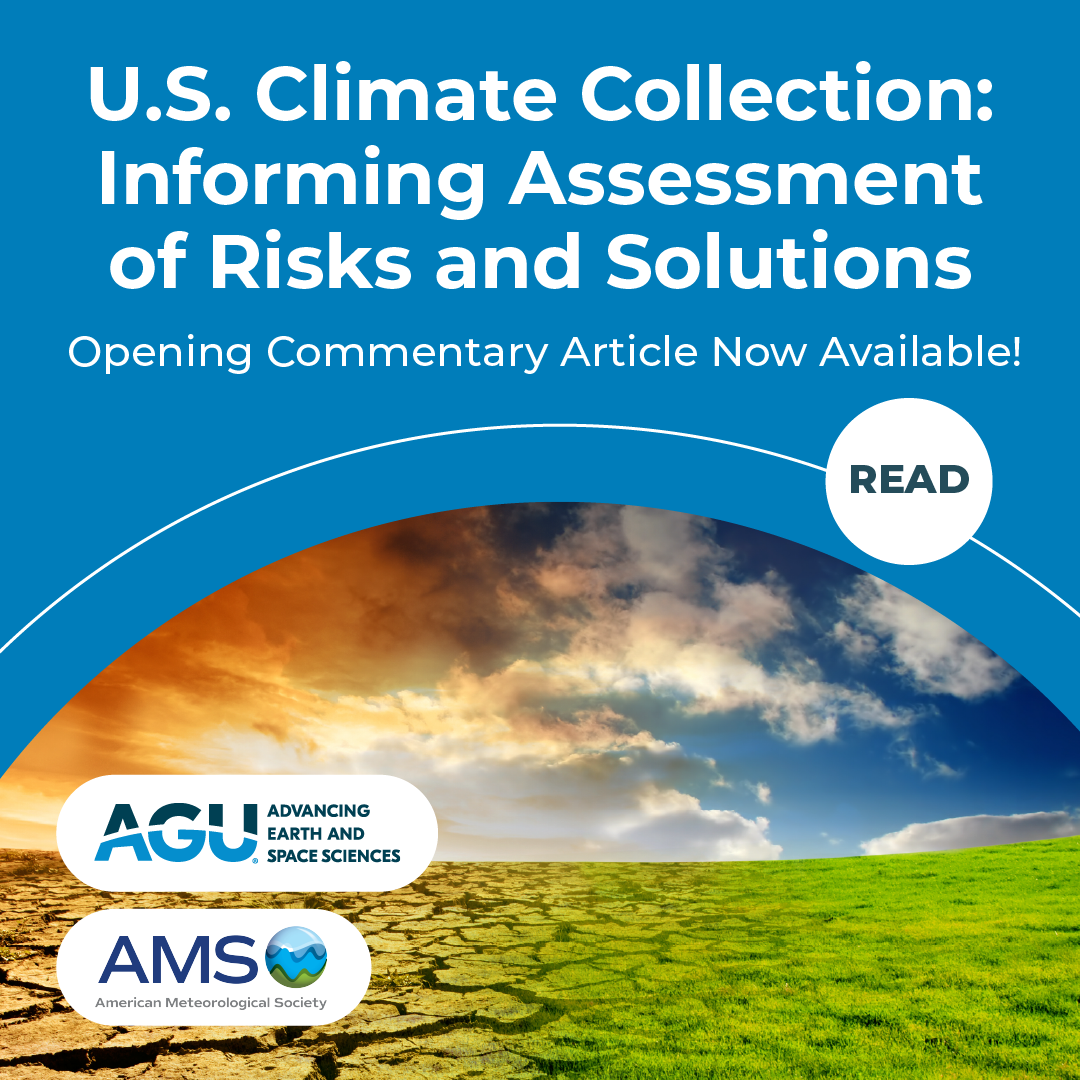
This publication marks the official launch of the U.S. Climate Collection: Informing Assessment of Risks and Solutions—a joint special collection between AGU and AMS dedicated to publishing synthesis papers and peer-reviewed climate science that support informed decision-making across national, regional, and sectoral levels.
The paper brings together 175 authors to outline research priorities that can inform future national, regional, local, sectoral and topical climate assessments. The priorities highlighted in the paper align directly with EDeN’s research areas:
- Environmental Migration: Examining how extreme weathers and slow-onset environmental stressors drive population displacement, managed retreat, planned relocation, and population mobility.
- Human–Environment Interactions: Analyzing how social systems and demographic structures shape exposure to climate hazards, drive the unequal distribution of burdens across vulnerable populations, and influence community health and adaptive capacity.
- Food Security: Assessing risks to agricultural productivity, rural livelihoods, supply chains, and food–energy–water nexus systems under compounding climate extremes, especially in Arctic and mountainous communities.
- Population and Built Environment/Infrastructure: Investigating how demographic change, urbanization, and growing demand interact with compounding climate risks to strain energy grids, transportation networks, and the built environment.
- Methodology: Advancing spatial demography, fine-scale geospatial modeling, data-intensive social science, and transdisciplinary frameworks that bridge geophysical observations with community-level socio-environmental data.
As formal climate assessment processes face institutional uncertainty, the continued collaboration of researchers across institutions ensures this critical work moves forward. Delivering rigorous, community-grounded science to planners, policymakers, and local leaders remains essential.
Call for Submissions: The AGU/AMS U.S. Climate Collection is actively welcoming submissions to advance research syntheses on climate systems, risks, impacts, and solutions: https://usclimatecollection.org/
Read the article here: https://doi.org/10.1029/2025EF007336